
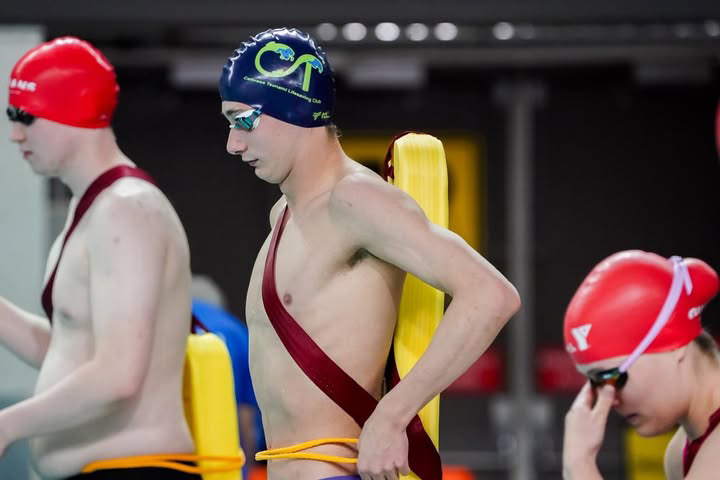
For Canadian lifesaver Kaleb Wilford, selection for the Lifesaving World Championships 2026 is a reward for years of dedication to the sport and a chance to take the next step on the international stage.
After competing at LWC2024 in the Interclub competition, Wilford will step up to the Canadian national youth team for the first time at LWC2026. His lifesaving journey began in the pool at just six years old, after following his sibling into the sport, and what started as something to try quickly became a passion that has continued to grow.
Wilford is preparing for Worlds with a demanding training schedule of eight pool sessions and two gym sessions each week. With every session focused on intent, precision and fine-tuning the technical aspects of his events, he is determined to make the most of his opportunity to compete on the world stage.
Wilford will contest the 200m Obstacle Swim, 200m Super Lifesaver and 100m Manikin Carry with Fins, and is looking forward to everything LWC2026 has to offer, from racing alongside elite athletes to experiencing the atmosphere of a major international meet.
We caught up with Kaleb to find out more about his lifesaving journey, preparation and ambitions for LWC2026.
What does being selected for the Lifesaving World Championships 2026 mean to you personally?
It means the world to be selected as it feels as if the work I’ve put in as an athlete is truly shining through. To reach a goal in sport is something so special because it means all the hard days and all the gruelling work you’ve dedicated to that sport was worth it as soon as you reach that goal, even though the goals never really stop.
Can you share a bit about your background in lifesaving and how you first got involved in the sport?
I started pool lifesaving when I was six years old. My sibling did it, so I just kind of got thrown into it as well. Turns out it was something I’m so very passionate about, so I’ve continued with it since, loving every second of it.
Who has had the biggest influence on your lifesaving career, and in what way?
My mom. She’s someone who has been there always, through hard times and through the highlights. She’s there for whatever I might need. Without her, my entire lifesaving career wouldn’t have existed, let alone been so prosperous with good memories. She’s always cheering me on, so in those last five metres of a race, I know who I’m pushing myself for, and it’s the same person who’s been cheering me on since I started.
Can you give us an insight into your preparation or training leading into Worlds? What does a typical week look like for you?
As a pool lifesaver, I’m in the water a lot. A typical week is eight pool sessions and two gym sessions. Leading into Worlds, every session is going to be done with intent and precision with what we work on, making sure every technical aspect is fine-tuned to perfection.
Which events will you be competing in, and what are you most looking forward to?
I’ll be competing in the 200m Obstacle Swim, 200m Super Lifesaver and 100m Manikin Carry with Fins. I’m looking forward to everything. I believe racing is the easy part and I can just enjoy the hard work I’ve put in and get the results.
I’m also always looking forward to the atmosphere of such a high-level meet. The athletes, the coaches, the spectators, everyone watching just makes this a really special time.
What are your expectations for the competition?
My expectation for the competition is that I’m hoping for great results, which lies in the placement and personal performance of myself as well as my team. I’ll always be hoping for the best in the race and let the results show themselves.
What’s one thing you’d like people to know about you, either as an athlete or outside the sport?
One thing I’d like people to know is that I make some absolutely fantastic snickerdoodles.
The 2026 Lifesaving World Championships begin in Port Elizabeth, Nelson Mandela Bay on 25 November 2026.