
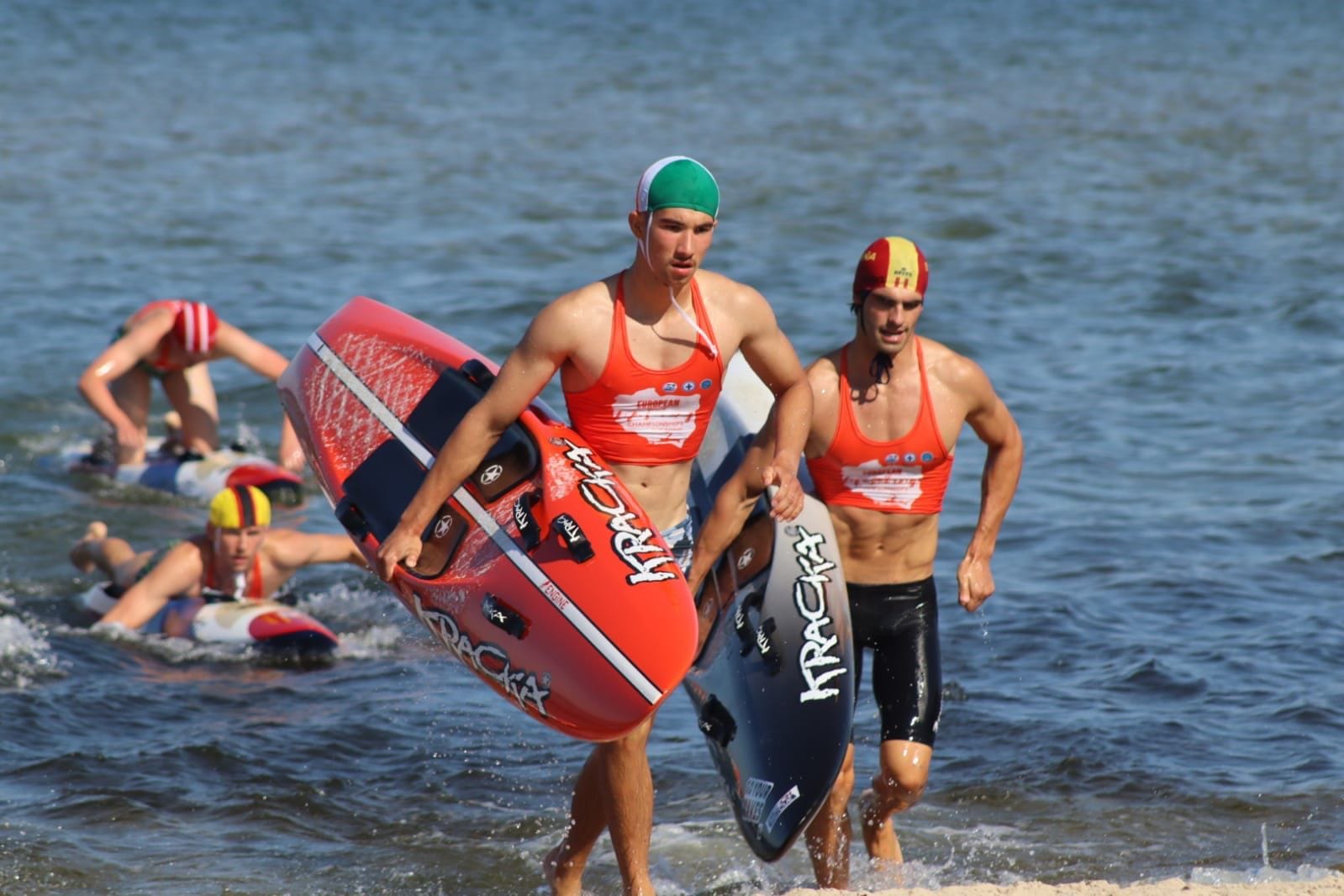
For Irish lifesaver Ferdia Hayes, representing his country at the Lifesaving World Championships 2026 in South Africa is the highest honour, providing an opportunity to compete against the world’s best athletes on the sport’s biggest stage.
Based in Ireland, Hayes has developed a strong passion for lifesaving since first getting involved at nine years old. Now balancing his second year of Mechanical Engineering at Technological University Dublin with training, he is preparing for a busy programme across pool and beach events at LWC2026.
With the Oceanman among his events, Hayes is looking forward to testing himself against the world’s best on the international stage.
We caught up with Ferdia to find out more about his lifesaving journey, preparation and what representing Ireland at LWC2026 means to him.
What does being selected for the Lifesaving World Championships 2026 mean to you personally?
It is the highest honour to have the chance to represent Ireland in Lifesaving at the World Championships in South Africa.
This competition is the pinnacle of Lifesaving sport in this year’s calendar, and getting the chance to race alongside the top athletes from other countries is certainly exciting and will be exhilarating.
Can you share a bit about your background in lifesaving and how you first got involved in the sport?
I was introduced to lifesaving accidentally. My mum thought it was a pre-lifeguarding course when I was nine years old. She had already signed me up and I decided to continue with it since it was so much fun training at the beach and with my friends.
Who has had the biggest influence on your lifesaving career, and in what way?
It has to be Bernard Cahil without question. He was one of the first from Ireland to show that it was possible to go head-to-head with the big powerhouse countries who have better funding and a wider reach of sport facilities and resources.
He’s from the part of Ireland where I’m from and, coming from training on the small beach in Miltown Malbay, he showed that anything is possible.
Can you give us an insight into your preparation or training leading into Worlds? What does a typical week look like for you?
Having returned to college, my hours on the beach have been drastically reduced. I’ve started flatwater kayak sprint to keep in the rhythm of lifesaving.
I try to get in 20 hours of training each week, with stretching mixed in with each session. Ideally, I would spend eight hours a week in a 50m pool, four hours on flatwater kayak, five hours in the gym and two hours running.
In the pool, I’m balancing pool lifesaving with my swim fitness, which I like as it keeps things interesting and prevents things from getting boring.
Which events will you be competing in, and what are you most looking forward to?
On the beach, I’ll be competing in the individual Surf Race, Ski Race and Oceanman. In the relays, I’ll be competing in the Taplin and Mixed Taplin.
In the pool, my individual events will be the 200m Super Lifesaver, 100m Rescue Medley, 50m Carry and 200m Obstacle. I’ll also be competing in the 4x25m Manikin Carry, 4x50m Medley, 4x50m Mixed Lifesaver and 4x50m Obstacle relays.
I’m most looking forward to the Oceanman, although it will hurt a lot. It’s one of those events where competing is fun no matter the result.
What are your expectations for the competition?
I have no expectations coming into this competition. It’s easy to say I want to come top 10 and make A finals, but I feel it adds extra performance pressure.
Although I think it is important to be realistic and believe it is possible to attain these results and not give up.
What’s one thing you’d like people to know about you, either as an athlete or outside the sport?
I’m currently studying Mechanical Engineering in my second year at Technological University Dublin. I can also play Vivaldi’s Four Seasons on the violin!
The 2026 Lifesaving World Championships begin in Port Elizabeth, Nelson Mandela Bay on 25 November 2026.