
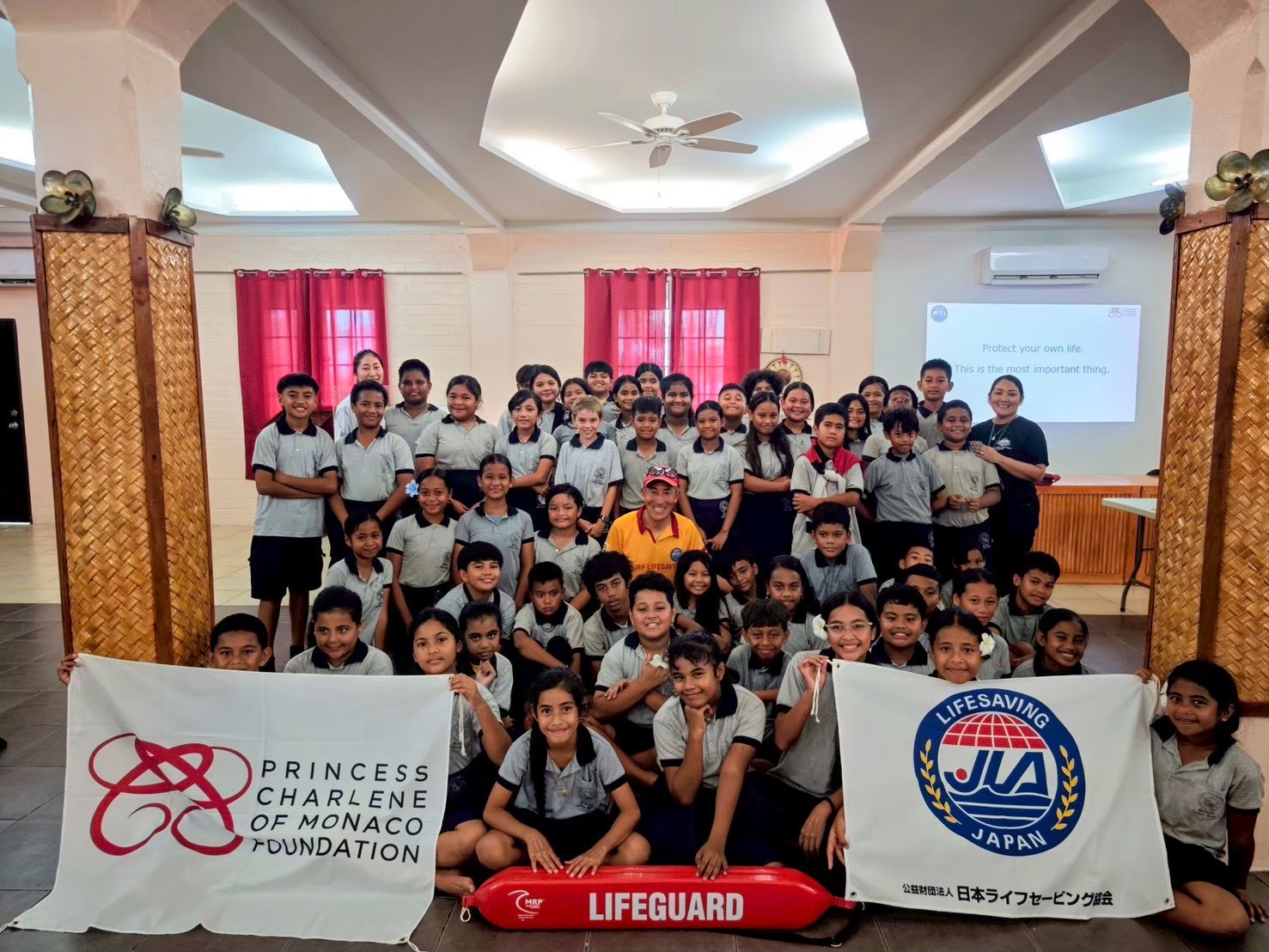
A landmark water‑safety initiative has reached the Federated States of Micronesia for the first time, as the Japan Lifesaving Association (JLA), backed by exceptional support from The Princess Charlene of Monaco Foundation, delivered a three‑day training program to children in Pohnpei State. The pilot project arrives amid alarming regional drowning statistics and growing calls for stronger lifesaving education across the Western Pacific.

With the support from The Princess Charlene of Monaco Foundation, Japan Lifesaving Association (JLA) implemented its first Water Safety Program for children on Pohnpei State in the Federated States of Micronesia (FSM). A preliminary survey conducted on Chuuk State in 2019 revealed the prevalence of water-related accidents in the community. Based on these findings, and while the Foundation’s longstanding support focuses on initiatives within Japan, this project was made possible through its exceptional support on a pilot basis.
As part of the JLA Action Plan 2031, JLA aims to strengthen cooperation with neighboring countries as a member of the Asia-Pacific region, in line with its strategy of promoting “International Contribution Focused on the Asia-Pacific Region”.
According to the WHO 2024 report, the Western Pacific region records approximately 84,000 drowning deaths each year – higher than any other region – and drowning remains the leading cause of death among children aged 5–14.
The Federated States of Micronesia’s drowning death rate per 100,000 people is 15.3, the highest in the Western Pacific region.
Over the three days, from February 19-21, indoor training sessions were held at three elementary schools and one college. The program included both classroom and pool-based training. Classroom sessions covered lifeguarding roles, drowning prevention in the Federated States of Micronesia, water safety knowledge, rescue techniques, CPR, and tsunami awareness.

Pool sessions focused on practical skills such as floating, treading water, diving, and rescue techniques with and without equipment.

Currently, there are no lifeguards in the FSM, and for many of the children, it was the first time they had seen the red and yellow lifeguard uniforms. However, the participants showed great enthusiasm and actively took part in the CPR demonstrations and other activities. We hope this program will contribute to reducing drowning incidents in the future.
JLA remains committed to continuing its efforts in the Asia-Pacific region.