
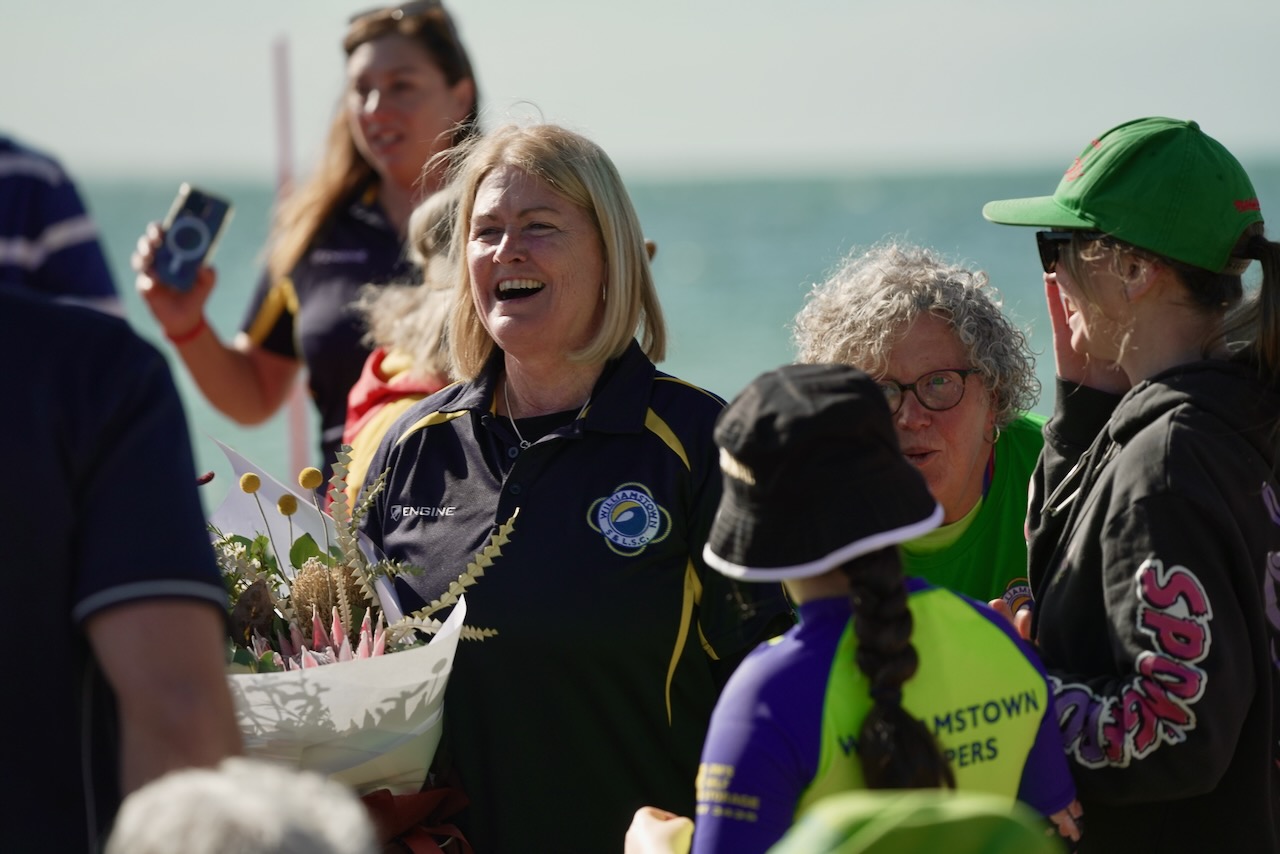
Lifesaving volunteer Veronica Treloar has won a prestigious national volunteer award in Australia, recognising her outstanding contribution to community sport.

The award, presented by the Australian Sports Commission (ASC), named Treloar as the 2025 Sport Volunteer of the Year for her decade-long commitment to inclusion and adaptive sport. A member of the Williamstown Swimming and Life Saving Club in Melbourne, Treloar coordinates the club’s Starfish Nippers program, which champions participation for children and athletes with disability.
Since taking on the role of coordinator for Williamstown’s Starfish Nippers program in 2016, Veronica has overseen its exponential growth, increasing participation from just five children with disabilities to more than 20. Her steadfast commitment to safety and support is highlighted by the program’s 1:1 volunteer-to-participant ratio for every session.
Those efforts were recognised on International Volunteer Day, leaving Veronica stunned during her acceptance speech.
“It’s pretty overwhelming – just blown away actually. It brought tears to my eyes. I had no idea as I was too busy worrying about today’s schedule…but it’s a lovely privilege,” Veronica said.
Veronica’s influence extends far beyond her home club. In 2024, her expertise in adaptive sport led her to join Life Saving Victoria’s Adaptive Sport Working Group.
She has since been instrumental in introducing adaptive events into three major lifesaving carnivals, providing 23 athletes with disabilities the opportunity to compete in lifesaving sport for the first time.
She has also taken a leadership role in supporting Starfish Nippers Carnivals, collaborating with other clubs to establish new pathways for participation and belonging for families across the state.
ASC CEO Kieren Perkins praised Treloar’s impact when presenting the award following International Volunteer Day.
“Volunteers like Veronica are at the heart of Australian sport. Her efforts to foster a culture of respect and accessibility show the power of a participant-centred approach,” Perkins said.